


Implementing PAXMAN SCALP COOLING
Global access to Paxman Scalp Cooling
We’re proud to provide global access to Paxman Scalp Cooling Systems and support through our specialist scalp cooling providers and network of distributors.
If you’d like to find out how you can become a Paxman Scalp Cooling provider at your site, please see our Implementation & Support resources below.
Protocols
implementation

Key considerations
Key clinical considerations when implementing the Paxman Scalp Cooling System at your site.

Consider space
Optimising double scalp cooling systems allows two patients to scalp cool at once to maximise your space.

Become familiar with the data
There is a wealth of clinical data and ongoing research. Advancing your knowledge will enable you to effectively identify more suitable patients.

Optimise chair time
Scheduling will be essential when integrating scalp cooling to allow for pre- and post-infusion cooling. If chair time is a concern, consider a post-infusion cooling room if possible.

Protocols
Ensuring you get the most out of scalp cooling.
How long should a patient be cooling for pre-infusion and post-infusion?
Pre-infusion cooling times only vary according to the chemotherapy regimen being administered, and your patient’s hair type in some cases.
To optimise chair time, pre- and post-infusion times can be conducted while other non-chemotherapy drugs or medication are being infused.
The Scalp Cooling Outcomes Calculator can be used to show the likelihood of hair retention based on drug regimen, and also provides pre- and post-infusion cooling times.


How do we ensure correct cap fit and hair preparation before the patient starts scalp cooling?
Please refer to our tutorial videos, which will guide you through the process of how to accurately size and fit the cold cap, as well as guidance on the appropriate hair preparation depending on hair type. Please also feel free to contact our Training Team for refresher sessions and additional guidance.

Implementing Scalp Cooling
Guidance and support to champion scalp cooling with confidence.
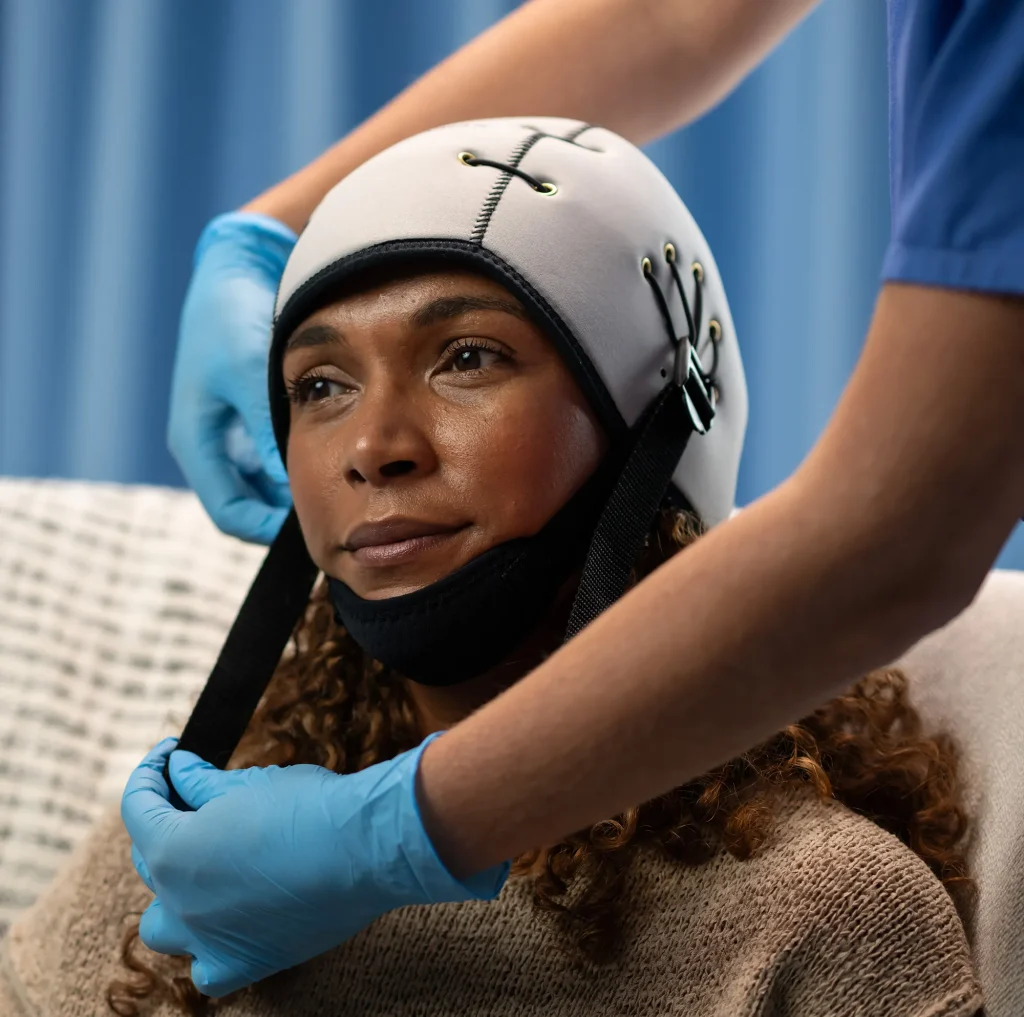
Clinician Training
We will work with you to make the implementation process as simple and effective as possible.
- Receive live, on-site training by Paxman staff on how to integrate with your workflows, how to use the system, and fit and size caps.
- Scale up your scalp cooling with our super-user training programme, allowing you to train your own staff.
- Online training certifications available for learning in your own time.
- Order printed education materials for distribution in your medical centre.
- Patient education support from Paxman to alleviate the burden on you and your staff.
Please get in touch with us to begin offering Paxman systems at your site.
We want a Paxman system at our site. How do we go about this?
Paxman will work with you to make the implementation process as simple and effective as possible. Training is given to ensure the Paxman systems are effectively integrated within your workflows, allowing your clinical teams to introduce scalp cooling and/or cryocompression therapy for the management of CIPN to your patients. This includes education on how to use the systems, facilitating sizing of the cap, gloves, and boots, and any materials that can support your patient through their experience.

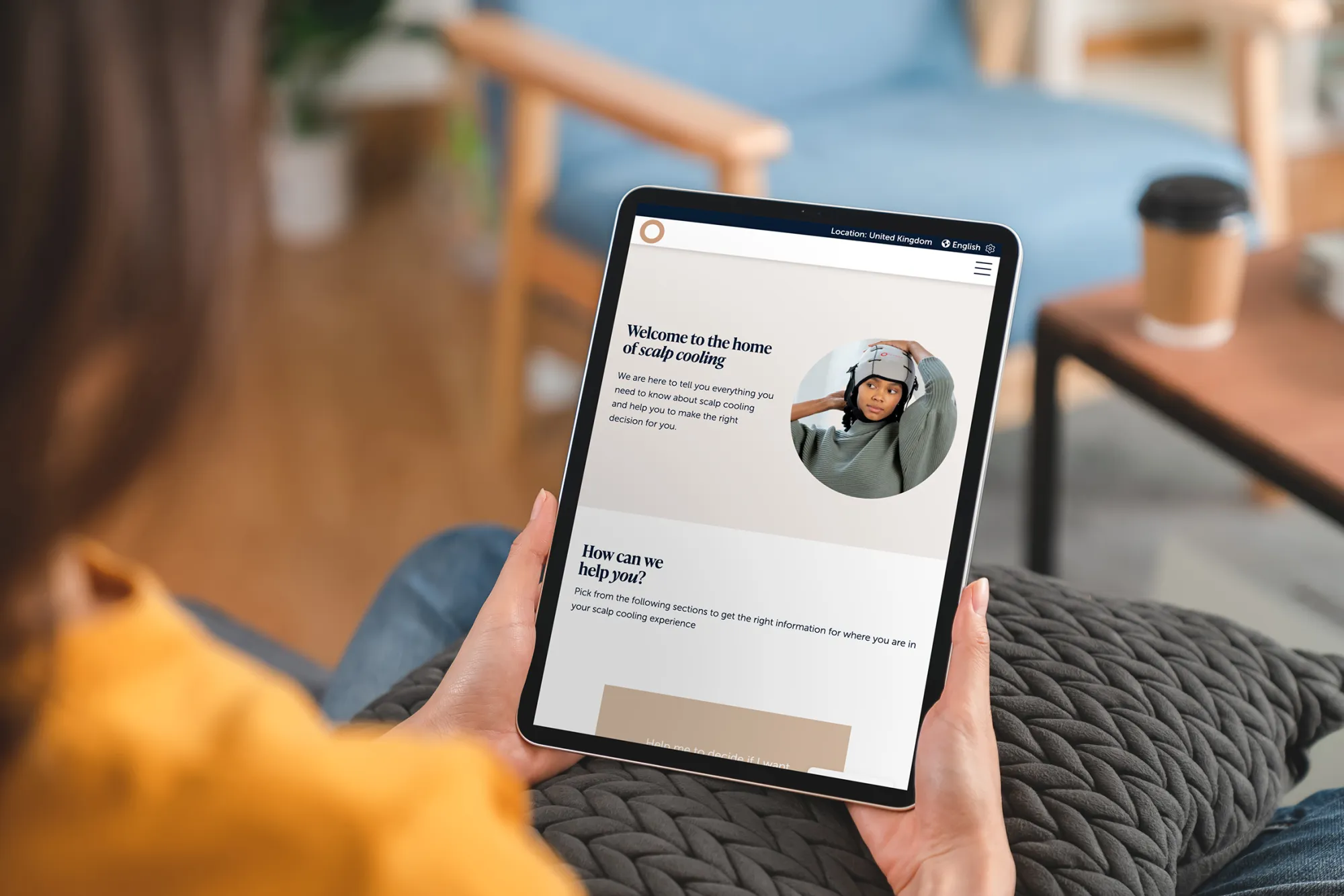
How will Paxman support my patients?
At Paxman we pride ourselves on providing exceptional patient support. Our patient support website helps patients make an informed choice to guide them through their scalp cooling treatment, and provides detailed support before, during and after their chemotherapy treatment.
Knowing if cold capping is right for them is a decision only the patient can make. The patient support website lays out everything patients need to know about Paxman scalp cooling to enable them to make an informed decision, and supports them through the process.
Resources available to patients:
- Tutorial videos
- Haircare advice
- Decision-making guide
- Patient stories
- Education materials
- Supportive social media
- Extensive FAQs
- Facebook support group
How can I manage my patient’s expectations around potential hair retention for their specific chemotherapy regimen?
The Scalp Cooling Outcomes Calculator will provide specific information about a patient’s potential hair retention based on data from the Scalp Cooling Registry.
The Scalp Cooling Registry is a source of data from over 7,000 patients, the largest of its kind globally. The Outcomes Calculator uses this data to provide an accurate indication of the likelihood of hair retention for your patient.
It is important that this data is interpreted as an indication of what may be possible. The percentages calculated are an average, and your patient may see more or less hair retention. There are no guarantees, but an indication of potential outcome will help to manage your patient’s expectations.
The calculator will also provide pre- and post-infusion cooling times for each regimen.

Scalp cooling outcomes calculator
Estimates are averaged percentages based on Scalp Cooling Registry data of over 7,000 real-world patients. Regimens and dosages included are those that have exceeded a minimum sample size threshold (n=10) to offer an interpretation of efficacy. Depending on sample size, results may show greater variation. There are no guarantees, but an indication of potential outcome will help to manage expectations. Pre-infusion and post-infusion cooling times per regimen are also displayed.
Start
Select your regimen
- Cabazitaxel (Jevtana) 25-50
- Cabazitaxel (Jevtana) 35-55
- Carboplatin 6 + Etoposide 50
- Cisplatin 25-75
- Cyclophosphamide 100 + Methotrexate 40 + 5-FU 600
- Cyclophosphamide 600 + Methotrexate 40 + 5-FU 600
- Docetaxel (Taxotere) 35
- Docetaxel (Taxotere) 75
- Docetaxel (Taxotere) 80
- Docetaxel (Taxotere) 100
- Docetaxel (Taxotere) 100H
- Doxorubicin (Adriamycine) 25
- Doxorubicin (Adriamycine) 60
- Epirubicin 25-90
- Epirubicin 50 + Oxaliplatin 130
- Eribulin
- Irinotecan (Campto) 180-250
- Irinotecan (Campto) 260-340
- Irinotecan (Campto) 350
- Methotrexate 10-30
- Mitomycin 60
- Mitomycin 60 + Cyclophosphamide 600
- Paclitaxel (Taxol) 50-75
- Paclitaxel (Taxol) 80
- Paclitaxel (Taxol) 80 + Trastuzumab
- Paclitaxel (Taxol) 90
- Paclitaxel (Taxol) 175
- Pegylated liposomal Doxorubicin 30-50
- Pegylated liposomal Doxorubicin + Carboplatin 5
- Pemetrexed 500
- Vinorelbine (Navelbine) 25
- Vinorelbine (Navelbine) 30
- AC: doxorubicin 60 + cyclophosphamide 600
- AC-D: doxorubicin 60 + cyclophosphamide 600 followed by docetaxel 100
- AC-T: doxorubicin 60 + cyclophosphamide 600 followed by paclitaxel 80
- AC-T: doxorubicin 60 + cyclophosphamide 600 followed by paclitaxel 80 + Trastuzumab
- AC-T: doxorubicin 60 + cyclophosphamide 600 followed by paclitaxel 175
- AC-T: doxorubicin 60 + cyclophosphamide 600 followed by paclitaxel 175 + Trastuzumab
- Docetaxel 75 + carboplatin 5-6
- Docetaxel + Pemetrexed
- Docetaxel 75 + cyclophosphamide 600
- FAC: fluorouracil (5-FU) 500 + doxorubicin 50 + cyclophosphamide 500
- FAC: fluorouracil (5-FU) 500 + doxorubicin 60 + cyclophosphamide 500
- FEC: fluorouracil (5-FU) 500 + epirubicin 50-70 + cyclophosphamide 500
- FEC: fluorouracil (5-FU) 500 + epirubicin 75-85 + cyclophosphamide 500
- FEC: fluorouracil (5-FU) 500 + epirubicin 90 + cyclophosphamide 500
- FEC: fluorouracil (5-FU) 500 + epirubicin 100 + cyclophosphamide 500
- FEC-D: fluorouracil (5-FU) 500 + epirubicin 90 + cyclophosphamide 500 followed by docetaxel 100
- FEC-D: fluorouracil (5-FU) 500 + epirubicin 100 + cyclophosphamide 500 followed by docetaxel 100
- FEC-T: fluorouracil (5-FU) 500 + epirubicin 100 + cyclophosphamide 500 followed by paclitaxel 80-100
- Gemcitabine 1000
- Gemcitabine 1000-1250 + carboplatin 4-6
- Paclitaxel 50 + carboplatin 2
- Paclitaxel 80 + carboplatin 2
- Paclitaxel 80 + carboplatin 5-6
- Paclitaxel 175 + carboplatin 5-6
- Paclitaxel 70 + carboplatin 3
- Paclitaxel 80 + avastin 10-15 mg/kg
- Paclitaxel 90 + avastin 10-15 mg/kg
- TAC: docetaxel 75 + doxorubicin 50 + cyclophosphamide 500
Outcome results
Your selected drug regimen:
Your outcome results:
Pre-infusion cooling time
Post-infusion cooling time:
Key implementation points to ensure success:

Make scalp cooling a multidisciplinary practice
It is important that all members of the oncology team are committed to and positive about scalp cooling. Introducing scalp cooling to the patient can be initiated by any member of the team – from surgeons to nursing teams, as well as oncologists.

More experienced sites have better efficacy rates
The more familiar you and your oncology team are with the scalp cooling system and procedures, the better outcomes your patients will have.

Make patient education and support easy
An educated patient has a better outcome. Support, advice, and guidance for patients have been curated by Paxman in a number of formats, ensuring that scalp cooling is not a burden on your clinical team. See coldcap.com.

Follow protocols closely
Accurate cap sizing and adhering to cooling times are clinically proven to optimise efficacy. Skipping the last 15 minutes of post-infusion cooling can compromise potentially fantastic results.

Scalp cooling and your procedures
A commitment to ongoing training and integration of scalp cooling procedures into standard processes, e.g., scheduling and patient records, will make for a more effective programme at your site.

Cost doesn’t have to be prohibitive to patient access
Paxman Scalp Cooling is available in cancer treatment centres around the world, helping patients access scalp cooling across a wide range of healthcare systems and care settings. Costs and reimbursement pathways vary by country, region, and provider.
While financial considerations may be a factor for some patients, funding assistance may be available through local charities, patient support organisations, foundations, or healthcare programmes designed to offer tailored support for cancer care. Patients are encouraged to speak with their healthcare team and local Paxman representative to explore the options available in their area.
In the United States, Paxman’s Insurance Based Billing Model (IBBM) allows facilities to directly bill insurance via Category I CPT® codes when administered by trained clinical staff under the supervision of a qualified healthcare professional and in an office or facility setting.
Learn about access and support in the United States

