


Chemotherapy-induced peripheral neuropathy
Reducing nerve damage during chemotherapy
Sensory nerve damage in the hands and feet caused by CIPN can significantly and permanently affect a patient’s daily life. While symptom severity varies between individuals, some patients experience long-term or permanent difficulties with mobility, balance, dexterity, and other routine activities.
Reduce chemotherapy nerve damage
Certain chemotherapy treatments including taxanes and platinum-based therapies can cause damage to the peripheral nervous system, particularly to the sensory nerves in the hands and feet. This is known as chemotherapy-induced peripheral neuropathy (CIPN) – a common and potentially dose-limiting side effect that could have lifelong detrimental effects on a patient’s quality of life, their livelihood and on healthcare systems.
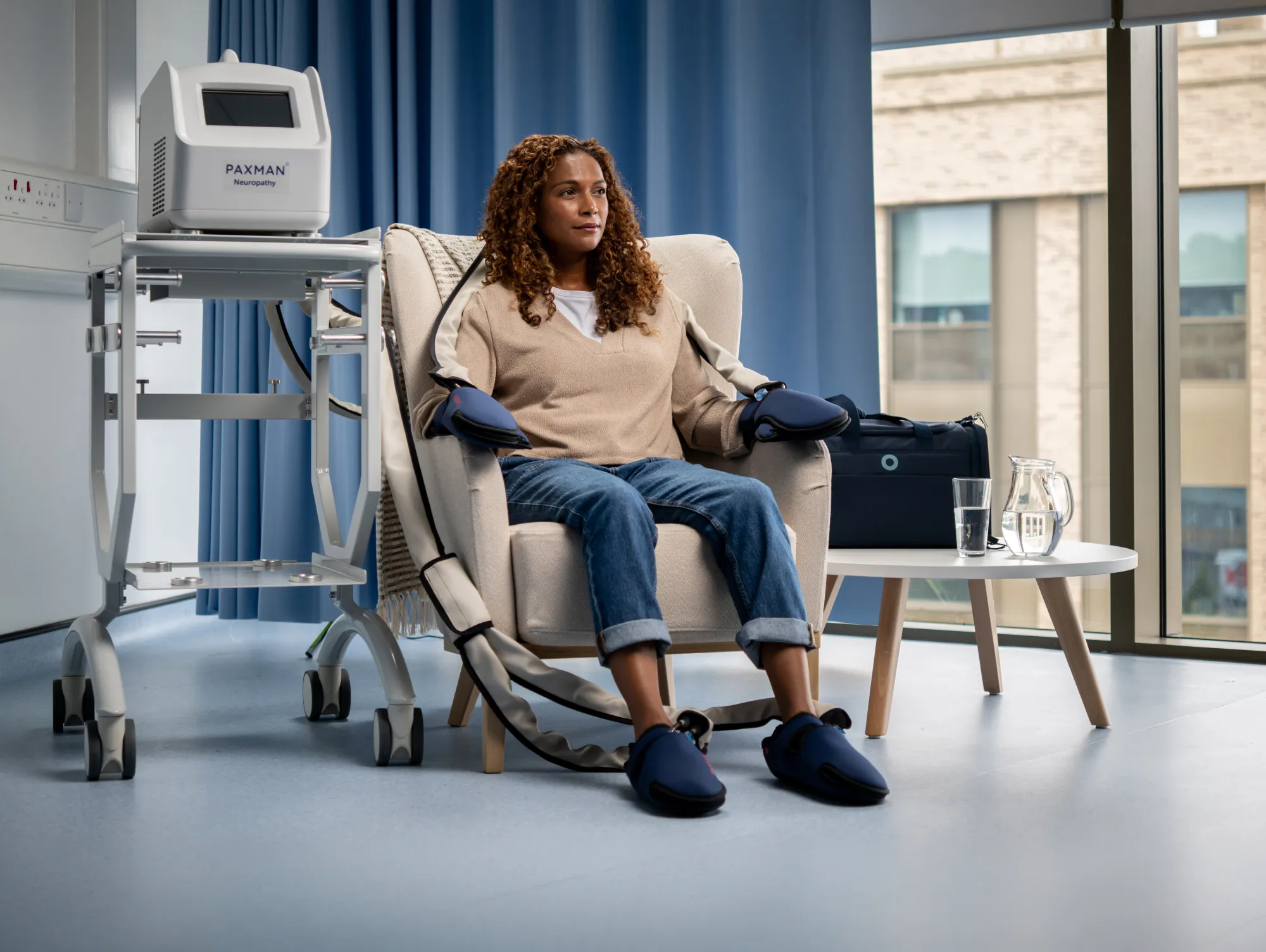
The Paxman Neuropathy – a system that uses both cryotherapy and compression – allows for tolerable cooling of the hands and feet to minimise damage to the peripheral nerves. Years of research and development have demonstrated that cryocompression is a safe and effective method of reducing CIPN.


estimated cancer patients worldwide are affected by chemotherapy-induced peripheral neuropathy every year.*
*Estimate derived from global chemotherapy incidence and published chemotherapy-induced peripheral neuropathy rates.1,2
Patient impact
A patient’s symptoms can range from mild to severe debilitating neuropathic pain and may include:

Numbness, pins and needles, tingling

Burning pain, electric shock-like sensations, or mechanical/thermal allodynia

Cold sensitivity, altered temperature perception
Weakness, loss of dexterity

Reduced sense of vibrations

Balance impairment, gait instability
2 in 5 patients
with CIPN will suffer from painful chronic symptoms for longer than three months, and potentially for life.3

Reducing nerve damage during chemotherapy
The Paxman Neuropathy System
Defining a new standard for CIPN management, the Paxman Neuropathy System is the only clinically validated solution that combines cooling and compression.
Administering controlled cryocompression with The Paxman Neuropathy System to the hands and feet before, during, and after chemotherapy results in a 95% relative risk reduction of dose-limiting CIPN incidence (NCI CTCAE Grade 2 and above)when compared to historical untreated controls.4
Designed for seamless integration into your oncology clinic, The Paxman Neuropathy System helps you to:
Reduce the risk of developing CIPN
Avoid the difficult decision between dose modification and treatment efficacy
Initiate discussions around CIPN with the patient
Reduce the growing CIPN survivorship issue, including changes to daily life or loss of employment
Avoid higher healthcare costs related to chronic CIPN management
Abandon reliance on uncontrolled, inconsistent manual cooling methods
With increasing cancer survival rates and expanding use of neurotoxic therapies, managing this long-term side effect has never been more important.
The science behind chemotherapy-induced peripheral neuropathy
CIPN is biologically complex – it does not arise from a single mechanism and is strongly associated with cumulative chemotherapy exposure.
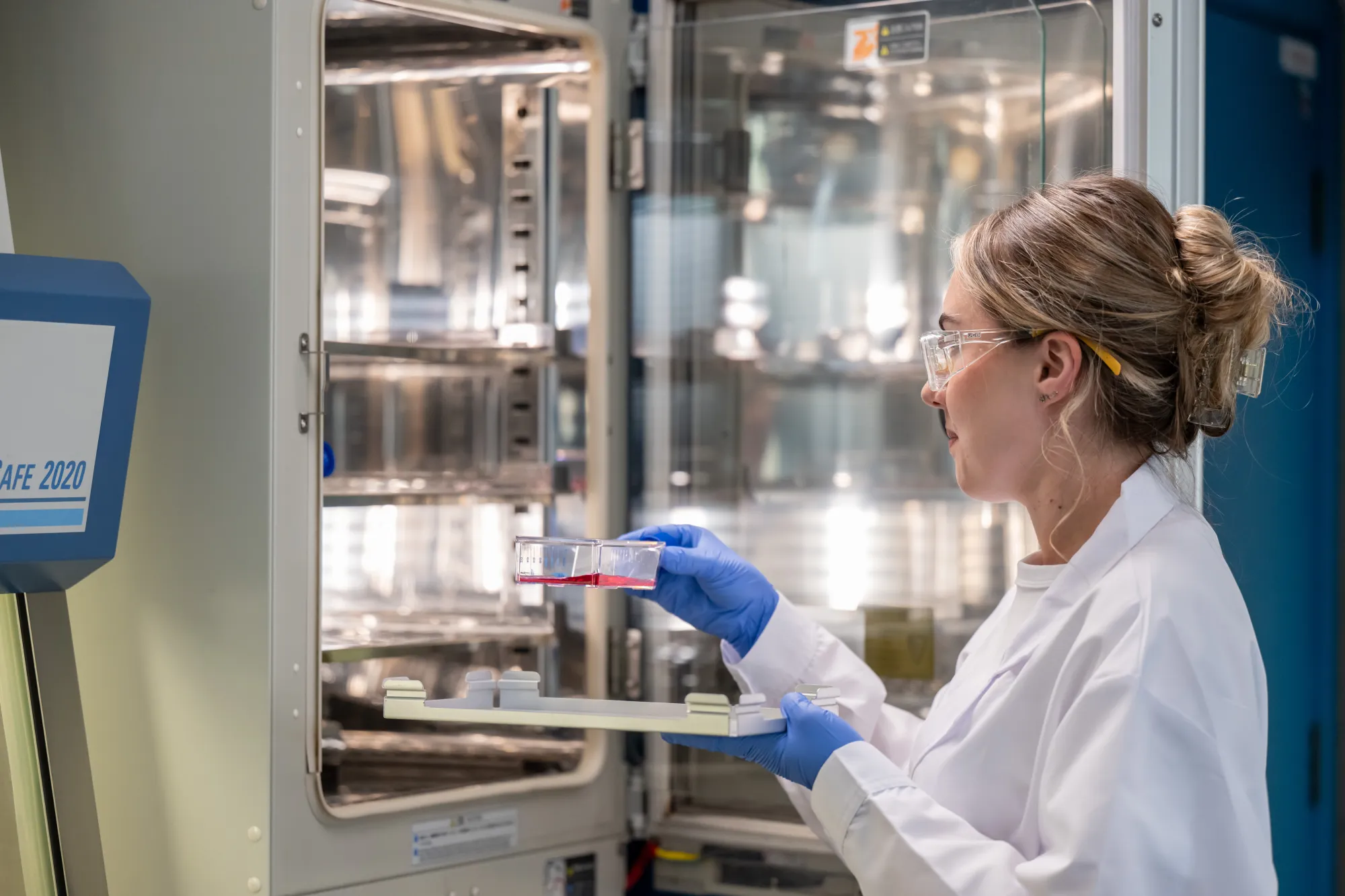
Biological research led by Paxman has started to provide evidence on how different chemotherapy drug classes initiate distinct ‘insults’ that cause cellular damage, in addition to how cooling and compression combined (cryocompression) can offer protection.5

How cryocompression could help reduce CIPN
Biological rationale and early clinical data suggest that cryocompression could become an important part of chemotherapy side-effect management, helping services protect patients from both cancer and the long-term consequences of its treatment.
Patient NEUROPATHY experiences

Frequently asked questions about reducing nerve damage

What causes CIPN?
The complexity of CIPN means that, rather than arising from a single pathway, damage occurs through interconnected cellular, metabolic, inflammatory, vascular, and electrophysiological processes. Evidence shows that different chemotherapy drug classes initiate distinct primary molecular ‘insults’ that cause cellular damage.[1]
These include cellular damage and oxidative stress; impaired axonal transport; disruption of normal nerve signalling; neuroinflammation; axonal degeneration; DNA damage; and sensory neuron degeneration.
[1] Etheridge H, Wong R, Sundar R, Bandla A, Georgopoulos NT. Chemotherapy-induced peripheral neuropathy (CIPN): disease mechanisms, experimental models, and emerging prevention strategies. Ther Adv Med Oncol. 2026.
How does the Paxman Neuropathy help to reduce CIPN?
The Paxman Neuropathy uses both cooling and compression (cryocompression) to help reduce CIPN. Cooling appears to exert direct biological effects, including vasoconstriction, reducing oxidative stress in cells, and protecting nerve cells from damage. Meanwhile, compression helps achieve lower skin temperatures by enhancing coolant distribution and providing a distraction effect that improves patient tolerability.
Why should our cancer centre offer cryocompression treatment for CIPN management?
For clinicians and hospitals that want to treat their patients fully with chemotherapy without the risk of permanent impairment, implementing a CIPN management programme can have a significant positive impact on patients’ wellbeing and quality of life during treatment. Paxman provides training and support to help centres successfully integrate the service.
Can I take a toilet break during treatment with the Paxman Neuropathy System?
Yes. Please discuss this with your nursing team to plan a brief toilet break of up to 10 minutes. Treatment should resume quickly, and breaks should not exceed 10 minutes.
Will neuropathy be completely prevented or treated?
The Paxman Neuropathy is intended to reduce the likelihood and severity of nerve damage symptoms. Although success cannot be guaranteed, clinical trials have shown a significant reduction in the number of patients experiencing symptoms or in the severity of their symptoms.
Will using the Paxman Neuropathy System impact how well my chemotherapy works?
No. The Paxman Neuropathy System does not change how chemotherapy treats your cancer.
What is chemotherapy-induced peripheral neuropathy (CIPN)?
CIPN is a debilitating and potentially dose-limiting side effect of several chemotherapeutic drugs. This common and potentially permanent side effect can affect approximately 50–70% of patients globally and can have profound implications for a person’s daily life.
CIPN can develop when damage occurs to the peripheral nervous system, particularly the sensory nerves of the hands and feet, typically in a glove-and-stocking distribution. It can progress with cumulative treatment exposure and, in severe cases, the damage can spread proximally and affect most of the limbs.
CIPN may include sensory symptoms such as numbness, tingling, burning, pain, and cold sensitivity; motor symptoms such as weakness, reduced dexterity, gait disturbance, and balance impairment; and functional consequences affecting writing, dressing, driving, walking, and other instrumental activities of daily living. Although it is predominantly seen as sensory neuropathy, motor and autonomic damage may also occur.
For any further questions, visit our FAQs page


References
- Seretny, M., G. L. Currie, E. S. Sena, S. Ramnarine, R. Grant, M. R. MacLeod, L. A. Colvin, and M. Fallon. 2014. “Incidence, prevalence, and predictors of chemotherapy-induced peripheral neuropathy: A systematic review and meta-analysis.” Pain 155 (12):2461-70. doi: 10.1016/j.pain.2014.09.020.
- Wilson BE, Jacob S, Yap ML, Ferlay J, Bray F, Barton MB. Estimates of global chemotherapy demands and corresponding physician workforce requirements for 2018 and 2040: a population-based study. Lancet Oncol. 2019 Jun;20(6):769-780. doi: 10.1016/S1470-2045(19)30163-9. Epub 2019 May 8. Erratum in: Lancet Oncol. 2019 Jul;20(7):e346. doi: 10.1016/S1470-2045(19)30375-4. PMID: 31078462.
- D’Souza RS, Saini C, Hussain N, et al. Global estimates of prevalence of chronic painful neuropathy among patients with chemotherapy-induced peripheral neuropathy: systematic review and meta-analysis of data from 28 countries, 2000–24. Regional Anesthesia & Pain Medicine Published Online First: 29 January 2025. doi: 10.1136/rapm-2024-106229
- Wong, R., Bandla A., “Limb Cryocompression for Prevention of Taxane-Induced Peripheral Neuropathy: A Phase II Study and a Randomized Phase III Trial,” Presentation, MASCC/ISOO Annual Meeting, Melbourne, Australia, 2026.
- Etheridge H, Wong R, Sundar R, Bandla A, Georgopoulos NT. Chemotherapy-induced peripheral neuropathy (CIPN): disease mechanisms, experimental models, and emerging prevention strategies. Ther Adv Med Oncol. 2026.
