


chemotherapy-induced hair loss
Reducing hair loss during chemotherapy
Losing your hair is a visible reminder of cancer treatment and is one of the most distressing side effects, even after treatment ends. Scalp cooling also known as cold capping – is clinically-proven to reduce chemotherapy hair loss and promote hair growth.
Reduce hair loss and protect hair follicles
Scalp cooling helps manage chemotherapy-induced alopecia
Chemotherapy agents cannot distinguish between hair follicle cells and the cancerous ones. Loss of hair can be traumatic, debilitating, and can have an understandably profound effect on a patient’s identity, privacy and confidence, making strategies for managing this side effect crucial.
Scalp cooling lowers the temperature of the scalp before, during, and after chemotherapy infusion to minimise damage to the hair follicles. Decades of clinical studies have demonstrated its success in helping to retain hair, promote quicker regrowth, and support the prevention of persistent alopecia.
6.4m

estimated cancer patients worldwide are affected by chemotherapy-induced alopecia.*
*Estimate derived from global chemotherapy incidence and published chemotherapy-induced alopecia rates.1,2
Paxman Scalp Cooling Systems
Globally recognised as the leading product for hair loss reduction during chemotherapy treatment for solid tumour cancers.
Paxman’s Scalp Cooling Systems provide reliable, continuous cooling at temperatures optimised for effective and tolerable hair follicle protection. With a design optimised for oncology workflows backed by extensive Paxman support, implementation couldn’t be easier.
By offering scalp cooling, you can help your patients:
Retain hair and promote quicker regrowth
Regain a feeling of control, confidence and normality
Maintain privacy over their diagnosis
Help prevent stress and depression
Keep positive attitudes to treatment
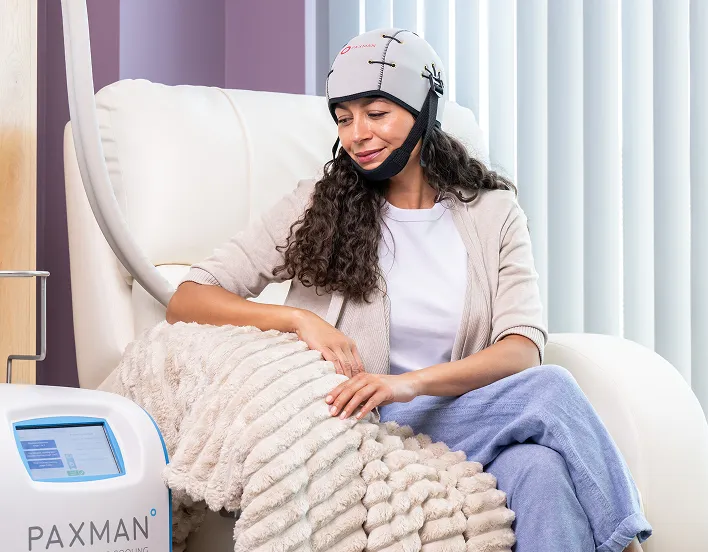
Wherever you are in the world, it's easy to give patients access to scalp cooling and a degree of control, by reducing hair loss.
Paxman in your regionThe science behind chemotherapy-induced alopecia
From constricting the blood vessels to helping differentiate the hair follicles from rapidly dividing cancer cells, scalp cooling changes the way chemotherapy drugs affect the hair cells in four distinct ways.
Supporting chemotherapy patients through scalp cooling
When everything feels uncertain, scalp cooling can give patients a degree of control. Our patient website provides everything patients need to know when scalp cooling.
Scalp cooling outcomes calculator
Estimates are averaged percentages based on Scalp Cooling Registry data of over 7,000 real-world patients. Regimens and dosages included are those that have exceeded a minimum sample size threshold (n=10) to offer an interpretation of efficacy. Depending on sample size, results may show greater variation. There are no guarantees, but an indication of potential outcome will help to manage expectations. Pre-infusion and post-infusion cooling times per regimen are also displayed.
Start
Select your regimen
- Cabazitaxel (Jevtana) 25-50
- Cabazitaxel (Jevtana) 35-55
- Carboplatin 6 + Etoposide 50
- Cisplatin 25-75
- Cyclophosphamide 100 + Methotrexate 40 + 5-FU 600
- Cyclophosphamide 600 + Methotrexate 40 + 5-FU 600
- Docetaxel (Taxotere) 35
- Docetaxel (Taxotere) 75
- Docetaxel (Taxotere) 80
- Docetaxel (Taxotere) 100
- Docetaxel (Taxotere) 100H
- Doxorubicin (Adriamycine) 25
- Doxorubicin (Adriamycine) 60
- Epirubicin 25-90
- Epirubicin 50 + Oxaliplatin 130
- Eribulin
- Irinotecan (Campto) 180-250
- Irinotecan (Campto) 260-340
- Irinotecan (Campto) 350
- Methotrexate 10-30
- Mitomycin 60
- Mitomycin 60 + Cyclophosphamide 600
- Paclitaxel (Taxol) 50-75
- Paclitaxel (Taxol) 80
- Paclitaxel (Taxol) 80 + Trastuzumab
- Paclitaxel (Taxol) 90
- Paclitaxel (Taxol) 175
- Pegylated liposomal Doxorubicin 30-50
- Pegylated liposomal Doxorubicin + Carboplatin 5
- Pemetrexed 500
- Vinorelbine (Navelbine) 25
- Vinorelbine (Navelbine) 30
- AC: doxorubicin 60 + cyclophosphamide 600
- AC-D: doxorubicin 60 + cyclophosphamide 600 followed by docetaxel 100
- AC-T: doxorubicin 60 + cyclophosphamide 600 followed by paclitaxel 80
- AC-T: doxorubicin 60 + cyclophosphamide 600 followed by paclitaxel 80 + Trastuzumab
- AC-T: doxorubicin 60 + cyclophosphamide 600 followed by paclitaxel 175
- AC-T: doxorubicin 60 + cyclophosphamide 600 followed by paclitaxel 175 + Trastuzumab
- Docetaxel 75 + carboplatin 5-6
- Docetaxel + Pemetrexed
- Docetaxel 75 + cyclophosphamide 600
- FAC: fluorouracil (5-FU) 500 + doxorubicin 50 + cyclophosphamide 500
- FAC: fluorouracil (5-FU) 500 + doxorubicin 60 + cyclophosphamide 500
- FEC: fluorouracil (5-FU) 500 + epirubicin 50-70 + cyclophosphamide 500
- FEC: fluorouracil (5-FU) 500 + epirubicin 75-85 + cyclophosphamide 500
- FEC: fluorouracil (5-FU) 500 + epirubicin 90 + cyclophosphamide 500
- FEC: fluorouracil (5-FU) 500 + epirubicin 100 + cyclophosphamide 500
- FEC-D: fluorouracil (5-FU) 500 + epirubicin 90 + cyclophosphamide 500 followed by docetaxel 100
- FEC-D: fluorouracil (5-FU) 500 + epirubicin 100 + cyclophosphamide 500 followed by docetaxel 100
- FEC-T: fluorouracil (5-FU) 500 + epirubicin 100 + cyclophosphamide 500 followed by paclitaxel 80-100
- Gemcitabine 1000
- Gemcitabine 1000-1250 + carboplatin 4-6
- Paclitaxel 50 + carboplatin 2
- Paclitaxel 80 + carboplatin 2
- Paclitaxel 80 + carboplatin 5-6
- Paclitaxel 175 + carboplatin 5-6
- Paclitaxel 70 + carboplatin 3
- Paclitaxel 80 + avastin 10-15 mg/kg
- Paclitaxel 90 + avastin 10-15 mg/kg
- TAC: docetaxel 75 + doxorubicin 50 + cyclophosphamide 500
Outcome results
Your selected drug regimen:
Your outcome results:
Pre-infusion cooling time
Post-infusion cooling time:

Scalp Cooling Registry success rates
Scalp cooling is the only clinically validated method of reducing chemotherapy-induced hair loss. Used in hospitals worldwide, scalp cooling helps many patients retain their hair during cancer treatment. The Scalp Cooling Registry analysed outcomes from 7,424 patients treated at 68 hospitals.
Frequently asked questions about managing chemotherapy hair loss

What is scalp cooling?
Scalp cooling has long been the only scientifically validated method of reducing chemotherapy hair loss and promoting quicker hair regrowth post treatment.
Can scalp cooling prevent all hair loss?
Scalp cooling cannot guarantee complete hair preservation.
Efficacy varies based on a series of factors, with the chemotherapy drug regimens being the primary influence. Taxane based regimens see the highest rates of hair retention, and although anthracycline regimens see a lower level of efficacy, scalp cooling with anthracyclines is still beneficial. As a safe and tolerable treatment, it is also proven to support regrowth, prevention of permanent chemotherapy-induced alopecia (PCIA) and improving quality of life. Most patients experience some degree of shedding or thinning. However, many patients retain enough hair that they do not feel the need to wear a wig or head covering.
Is scalp cooling safe?
Scalp cooling efficacy for preventing chemotherapy-induced alopecia has been proven safe in many clinical trials and within numerous centers for solid tumour cancers.
Scalp cooling has been used worldwide for many years and is considered a safe intervention for eligible patients receiving chemotherapy. Known side effects associated with scalp-cooling therapy include discomfort due to feeling cold, headache, light-headedness or dizziness, nausea. All these side effects occur during the scalp cooling process. They are transient or temporary in duration and are generally recognised as presenting a low risk of harm (although in some cases, patients have discontinued scalp cooling because of these effects).
Do major cancer guidelines recommend scalp cooling?
International cancer care guidelines support offering scalp cooling to appropriate patients. Scalp cooling is also widely incorporated into cancer care practices and workflows across leading cancer centres internationally.
Who is suitable for scalp cooling?
Most patients receiving intravenous chemotherapy associated with hair loss may be eligible. Suitability depends on the type of cancer, chemotherapy regimen, and individual medical considerations. The treating oncology team will advise whether scalp cooling is appropriate.
What should patients expect during treatment?
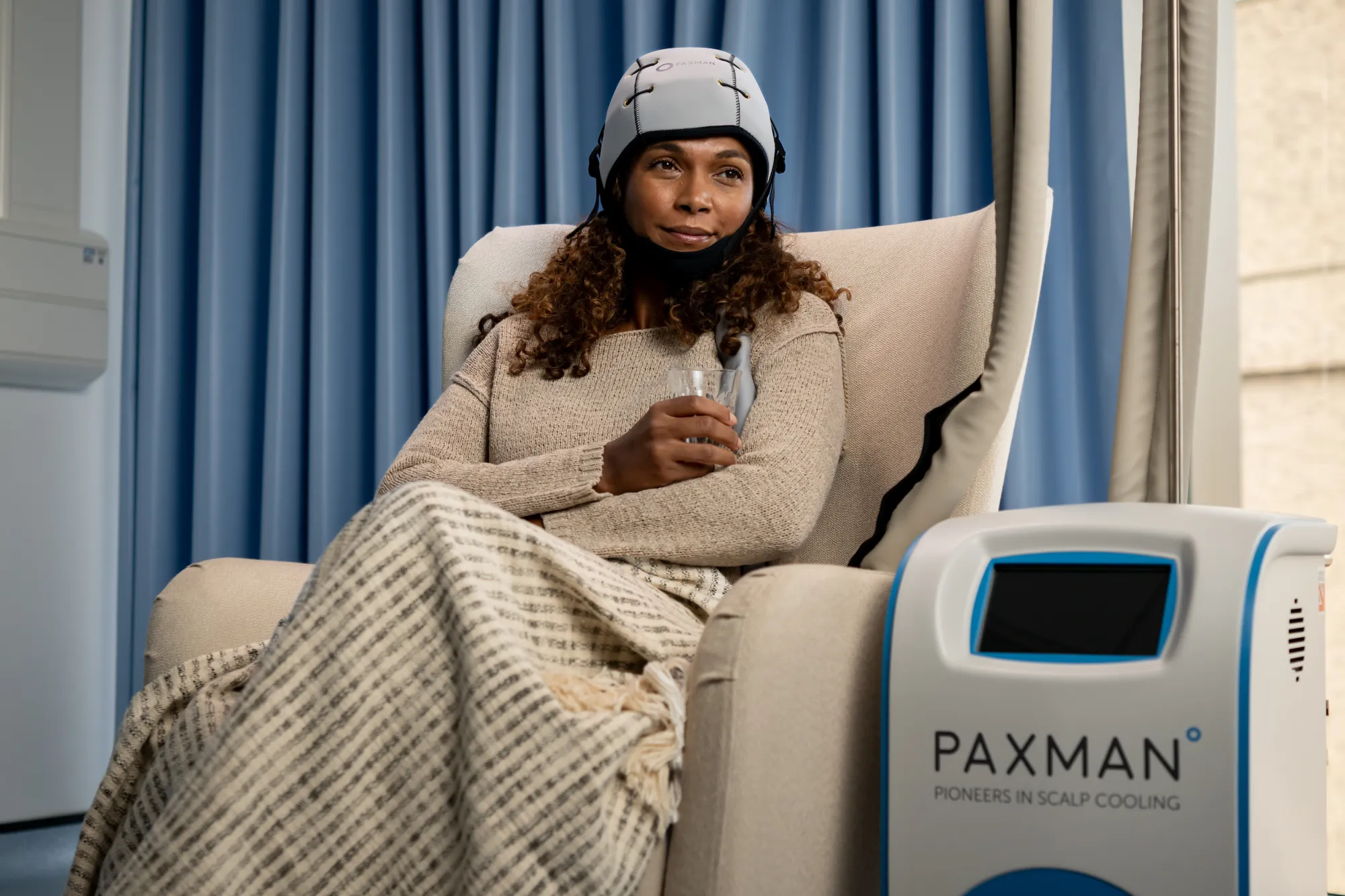
Patients wear a Paxman Scalp Cooling Cap before, during, and after chemotherapy. The first 10–15 minutes are often described as the coldest, after which most patients become accustomed to the sensation. Treatment times vary depending on the chemotherapy regimen.
For any further questions, visit our FAQs page


References
- Wilson, B. E., Jacob, S., Yap, M. L., Ferlay, J., Bray, F., & Barton, M. B. (2019). Estimates of global chemotherapy demands and corresponding physician workforce requirements for 2018 and 2040: a population-based study. The Lancet. Oncology, 20(6), 769–780. https://doi.org/10.1016/S1470-2045(19)30163-9
- Santos, T. S., Hernandéz Galvis, K., Vañó Galván, S., & Saceda-Corralo, D. (2021). Post-chemotherapy alopecia: what the dermatologist needs to know. International journal of dermatology, 60(11), 1313–1317. https://doi.org/10.1111/ijd.15812
