


Implementing Paxman Neuropathy
Implementing The Paxman Neuropathy System
We’re on an ambitious mission to create a world where chemotherapy-induced peripheral neuropathy (CIPN) is no longer an issue. Access to the Paxman Neuropathy System – an effective intervention to manage CIPN – is expanding across the world.
Protocols
implementation

Key considerations
Key clinical considerations when implementing the Paxman Neuropathy System at your centre.

Consider space
Optimising the Paxman Neuropathy with a Paxman Scalp Cooling System allows patients to scalp cool at the same time.

Become familiar with the data
Advancing your knowledge around the clinical data and ongoing research of cooling and compression to manage CIPN will enable you to confidently deliver cryocompression to suitable patients.

Optimise chair time
Scheduling will be essential when integrating the Paxman Neuropathy System to allow for pre- and post-infusion cooling – even more so when offering scalp cooling at the same time. If chair time is a concern, consider a post-infusion cooling room if possible.

Protocols
Ensuring you get the most out of the Paxman Neuropathy System.
How long should a patient be cooling for pre-infusion and post-infusion?
Pre- and post-infusion cooling only varies for scalp cooling. For the hands and feet, timings should be set at 30 minutes. To optimise chair time, pre- and post-infusion cooling can be conducted while other non-neurotoxic drugs or medications are being infused.
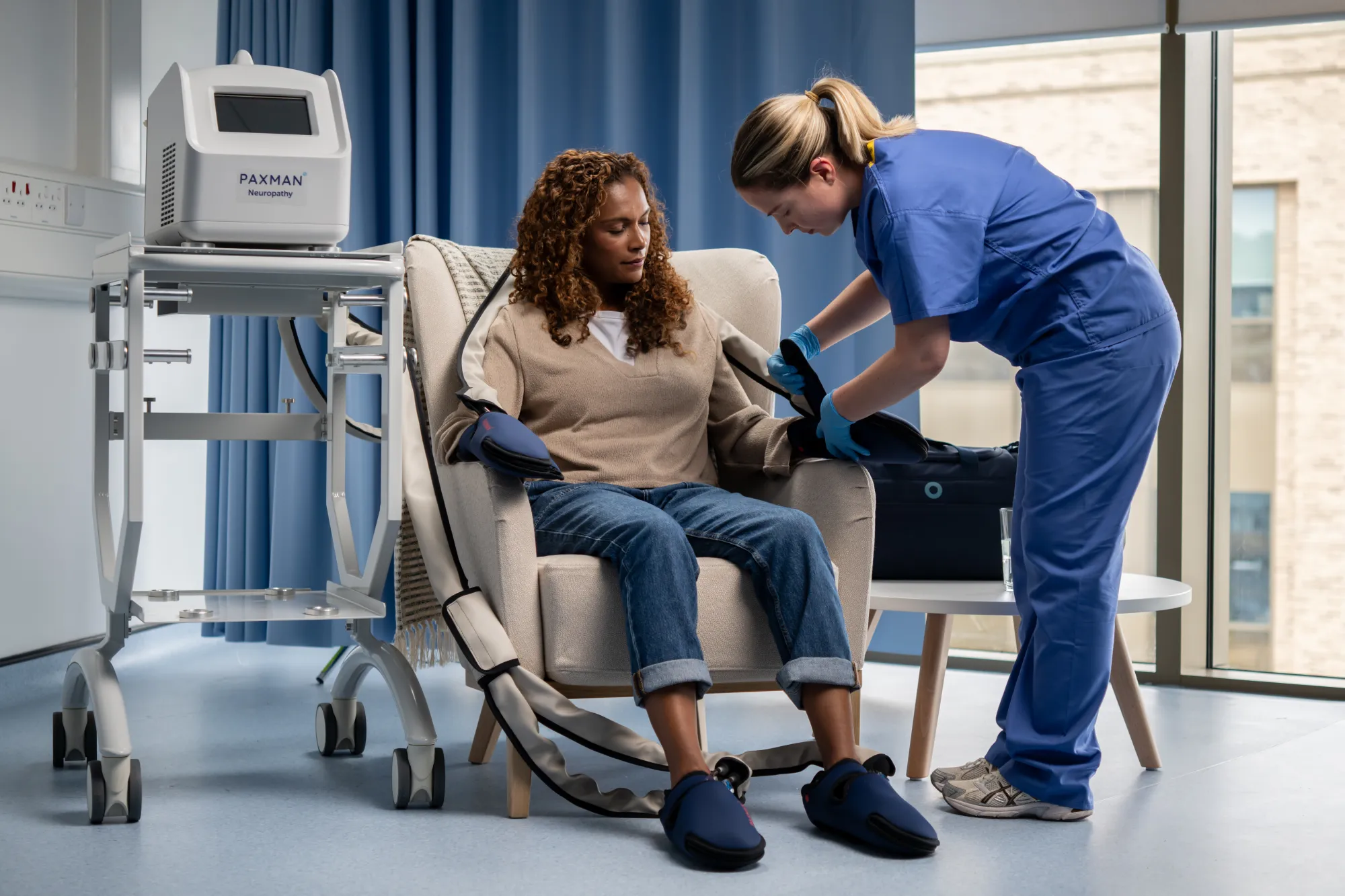
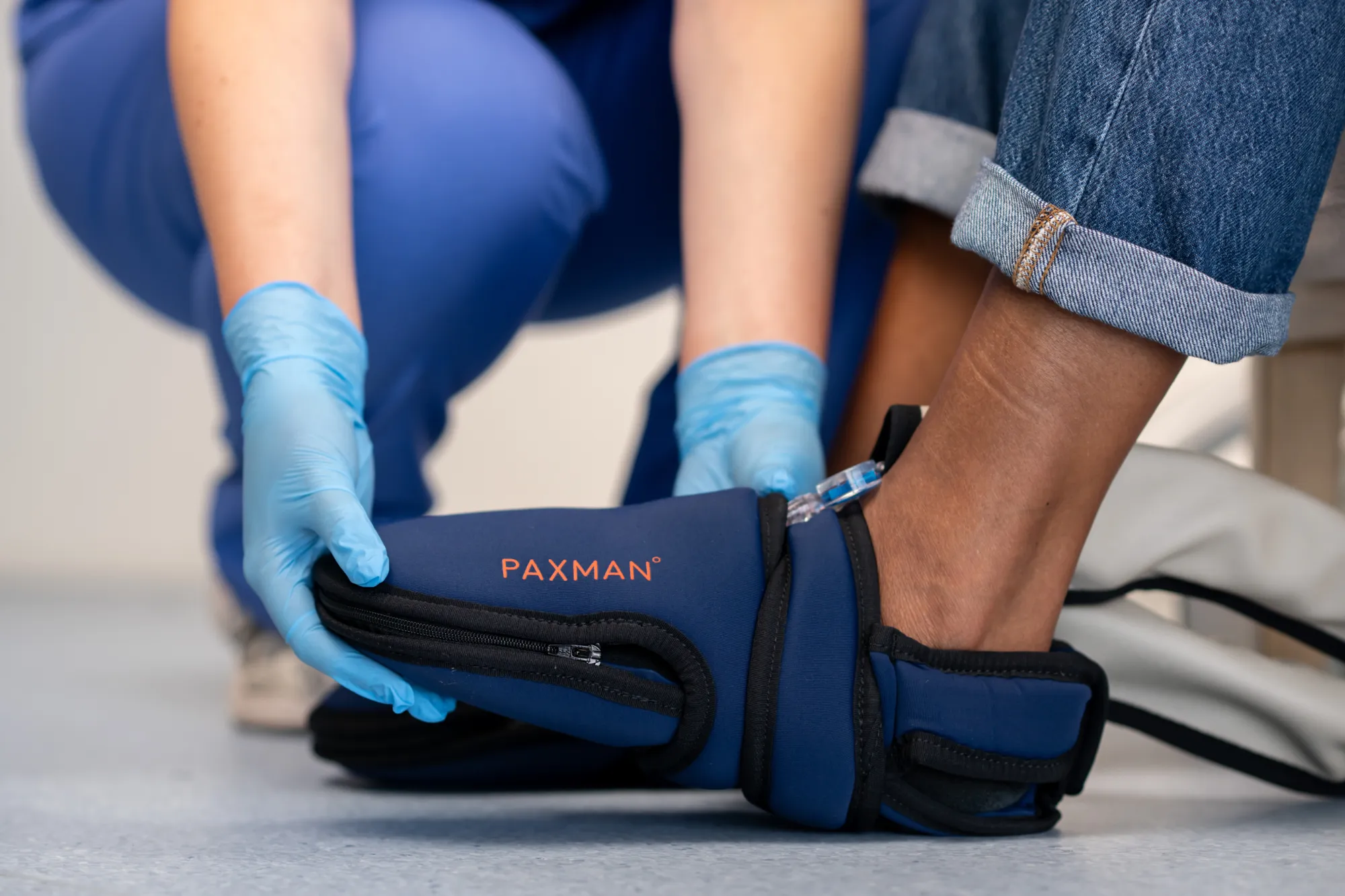
How do we ensure correct fitting of the Paxman Gloves and Boots before the patient starts cryocompression?
Please refer to the relevant module of the training guide, which will be provided by your Paxman representative. This gives detailed instructions on how to ensure the gloves and boots are appropriately fitted for optimal cooling whilst remaining tolerable. Please also feel free to contact our training team for refresher sessions or additional guidance.

Implementing The Paxman Neuropathy System
Guidance and support to help you become a pioneer in CIPN management.
Clinician Training
We will work with you to make the implementation process as simple and effective as possible.
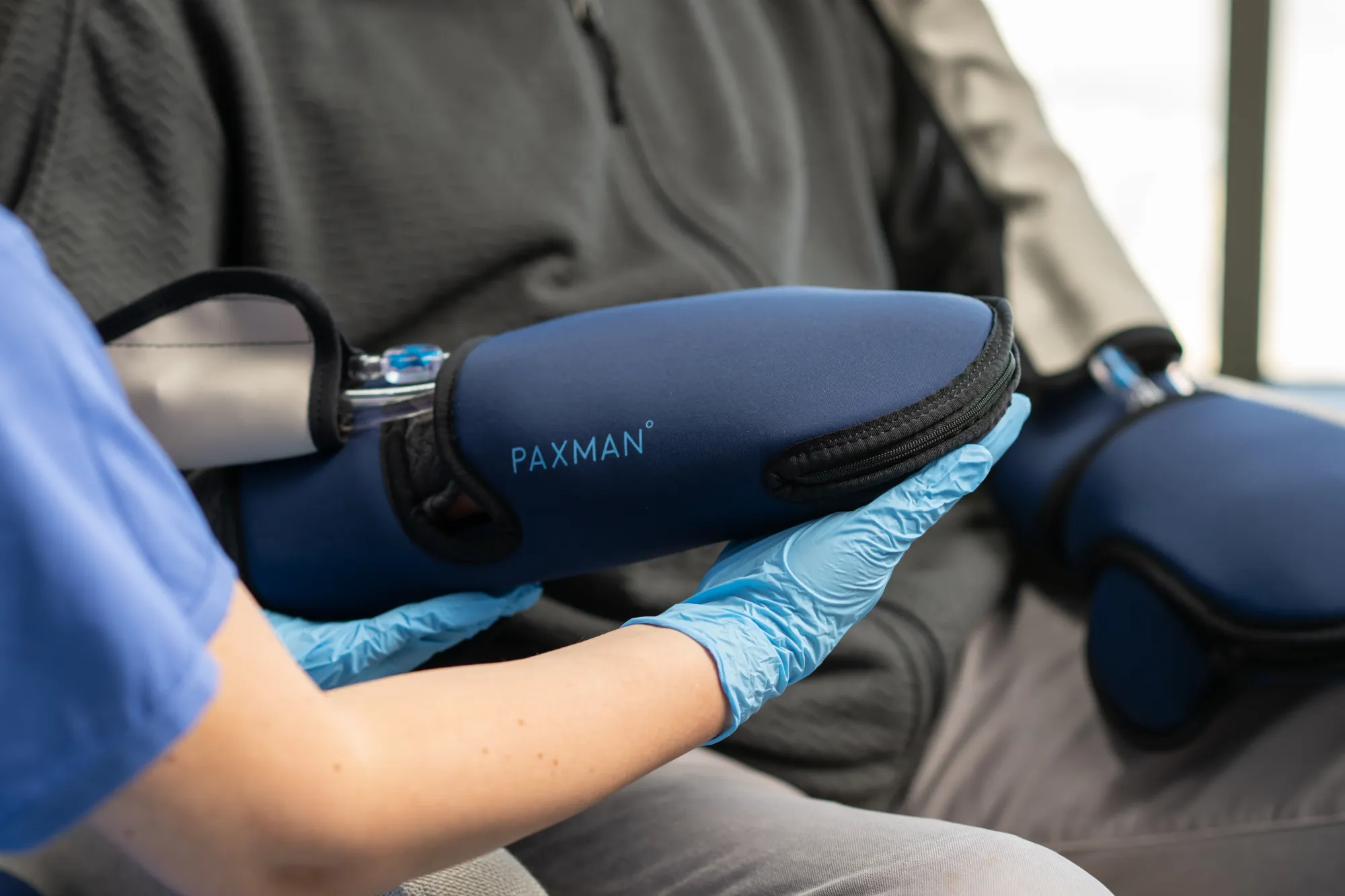
- Receive live, on-site training by Paxman staff on how to integrate with your workflows, how to use the system, and fit and size Paxman Gloves and Boots
- If applicable, you’ll learn how to implement and deliver scalp cooling alongside the Paxman Neuropathy System
- Scale-up your cryocompression with our super-user training programme, allowing you to train your own staff
- Online training certifications available for learning in your own time
- Order your own printed education materials for distribution in your medical centre
Please get in touch with us to begin offering the Paxman Neuropathy System at your site.
How will Paxman support my patients?
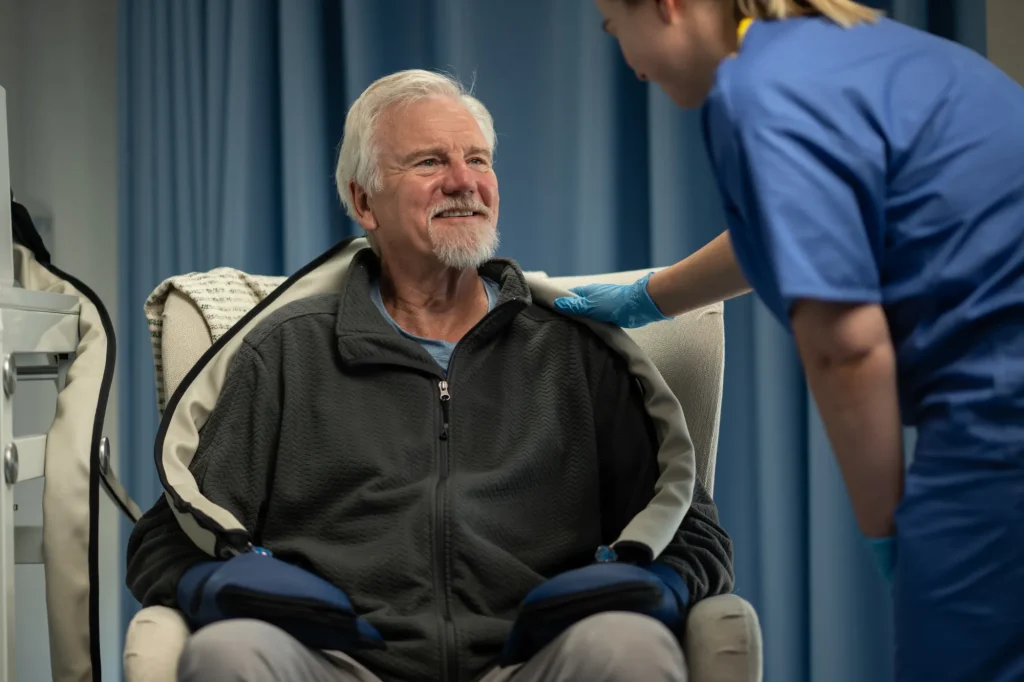
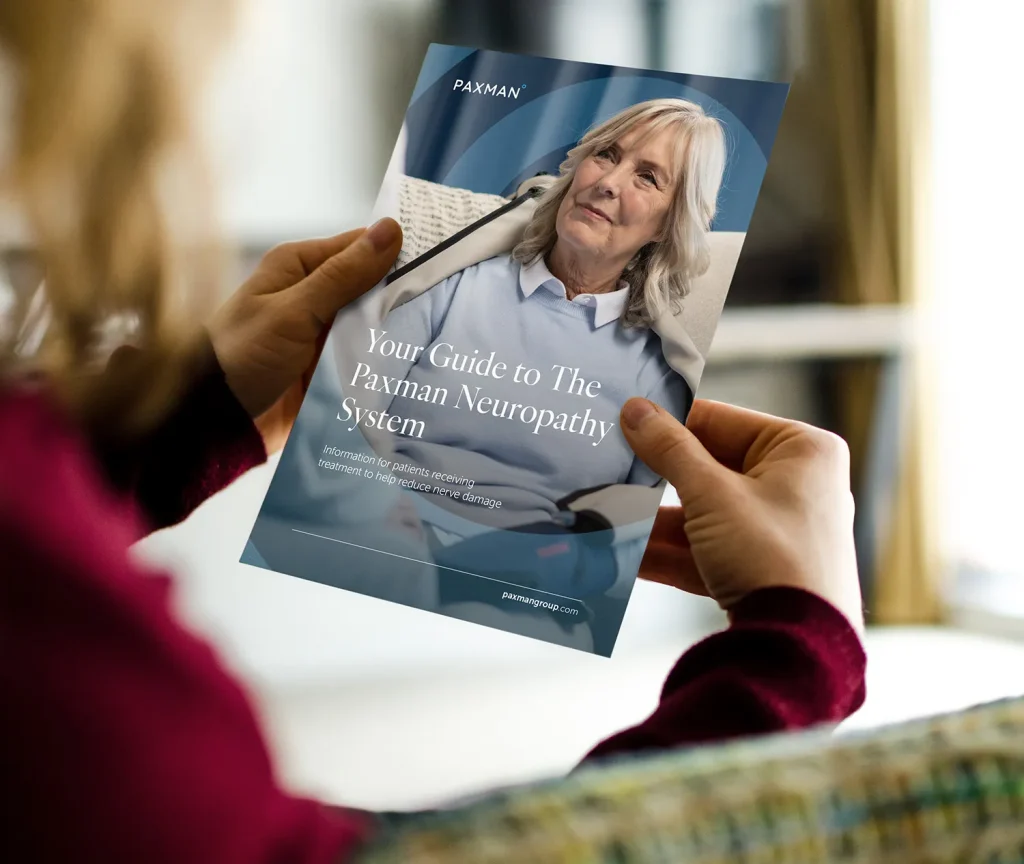
At Paxman, we pride ourselves on providing exceptional patient support. Our Paxman Neuropathy System patient education resources will cover what to expect and how the system works to help reduce the side effect of CIPN.
How can I manage my patient’s expectations around CIPN management?
Unlike chemotherapy-induced alopecia, where the level of hair loss can visibly be seen within a couple of weeks of the first chemotherapy session, the symptoms of CIPN may not occur until long after chemotherapy treatment has finished. CIPN can be either acute, chronic, or both. With an estimated 68% prevalence of CIPN within one month after chemotherapy1, the Paxman Neuropathy System offers reassurance by reducing the relative risk in incidence of NCI CTCAE Grade 2 or higher CIPN by 95%.
Our patient leaflet will provide patients with information on what to expect on the day of treatment. It is important that oncologists or clinical teams also have the discussion with patients about CIPN prior to treatment and how to recognise or report the symptoms should they develop any.
Key implementation points to ensure success:
Make the Paxman Neuropathy System a multidisciplinary practice
It is important that all members of the oncology team are committed to and positive about reducing CIPN with cryocompression. Introducing the Paxman Neuropathy System to the patient can be initiated by any member of the team – from surgeons to nursing teams, as well as oncologists.

Follow protocols closely
CIPN can be a permanent, life-changing condition that stems from cumulative exposure to neurotoxic agents. Correct sizing and fitting of the gloves and boots is important for efficacy. Cutting the post-infusion cooling time short can compromise management efforts.

Cryocompression and your procedures
A commitment to ongoing training and integration of procedures into standard processes, e.g., scheduling and patient records, will make for a more effective programme at your site.

Cost doesn’t have to be prohibitive to patient access
Availability of the The Paxman Neuropathy System is growing (see our systems locator), helping patients access CIPN management across a wide range of healthcare systems and care settings. Costs and reimbursement pathways vary by country, region, and provider.
While financial considerations may be a factor for some patients, funding assistance may be available through local charities, patient support organisations, foundations, or healthcare programmes designed to offer tailored support for cancer care. Patients are encouraged to speak with their healthcare team and local Paxman representative to explore the options available in their area.
In the US, it is anticipated that Category III CPT codes will soon be available for cryocompression treatment for CIPN management.
Wherever you are in the world, it's easy to give patients access to our treatment and a degree of control. Get Paxman

References
- Seretny, Martaa,*; Currie, Gillian L.b; Sena, Emily S.b; Ramnarine, Sabrinaa; Grant, Robinc; MacLeod, Malcolm R.b; Colvin, Leslie A.c; Fallon, Mariea. Incidence, prevalence, and predictors of chemotherapy-induced peripheral neuropathy: A systematic review and meta-analysis. Pain 155(12):p 2461-2470, December 2014. | DOI: 10.1016/j.pain.2014.09.020
